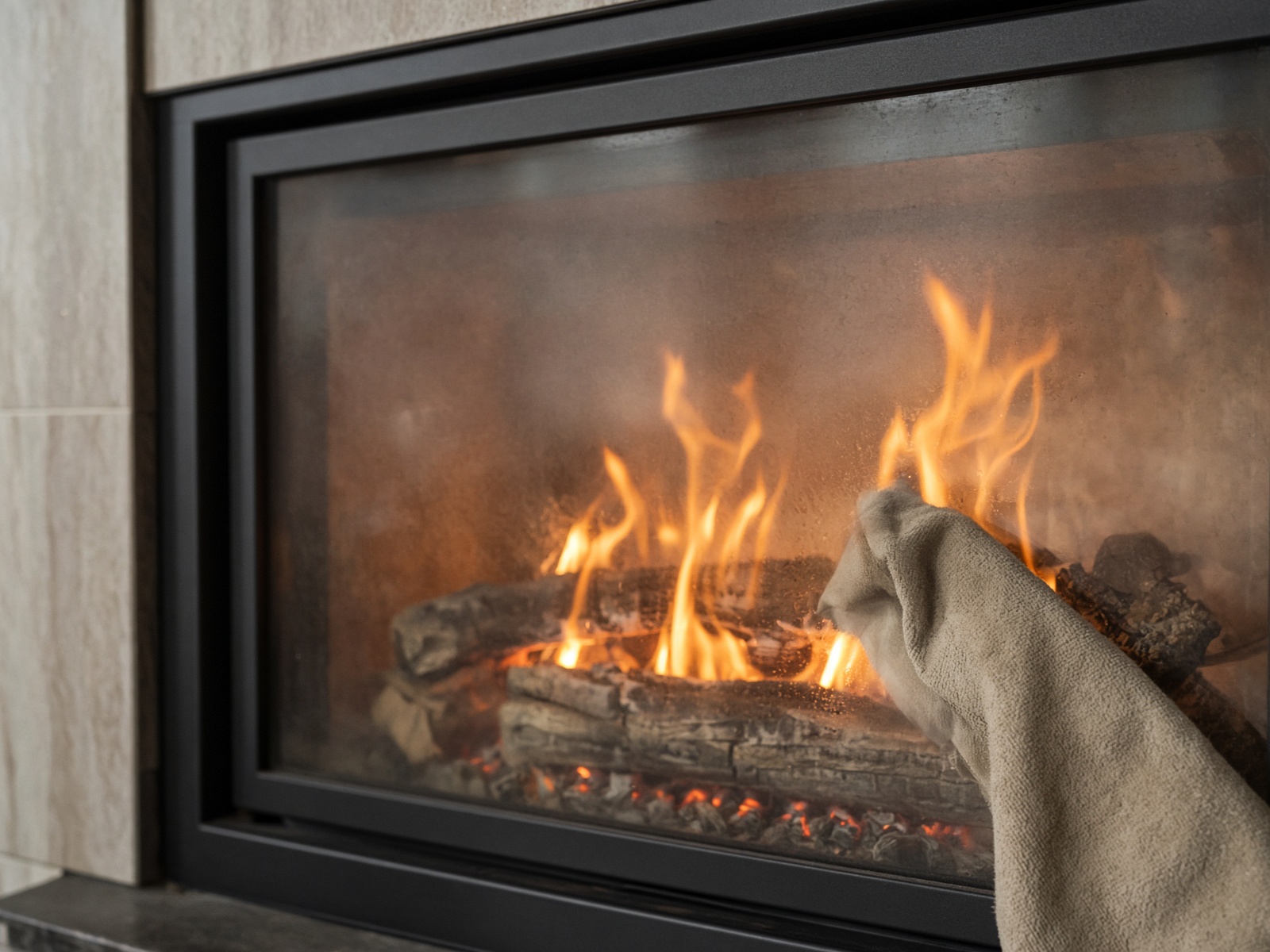
What a specialist repair visit actually covers
Most San Antonio homeowners do not need a new fireplace. They need someone who will take the glass off, read the millivolt output on the thermocouple and thermopile, and decide whether the problem is a dirty pilot, a tired sensor, a stuck valve, a dead remote receiver, or a vent cap full of mud daubers. That is slower than swapping a part on speculation and faster than waiting through a second trip because the first tech only carried chimney brushes.
A typical appointment starts at the shutoff valve and the rating plate. We confirm fuel type — natural gas on most of the inner loop, propane on some Hill Country lots in Helotes and west of Boerne — and we confirm the vent path. Direct-vent units draw combustion air from outside through a coaxial pipe. B-vent units use indoor air and a draft hood. Vent-free units have an oxygen depletion sensor that must work. Treating those three systems as if they were the same is how fireplaces get adjusted into sooting or shutdowns.
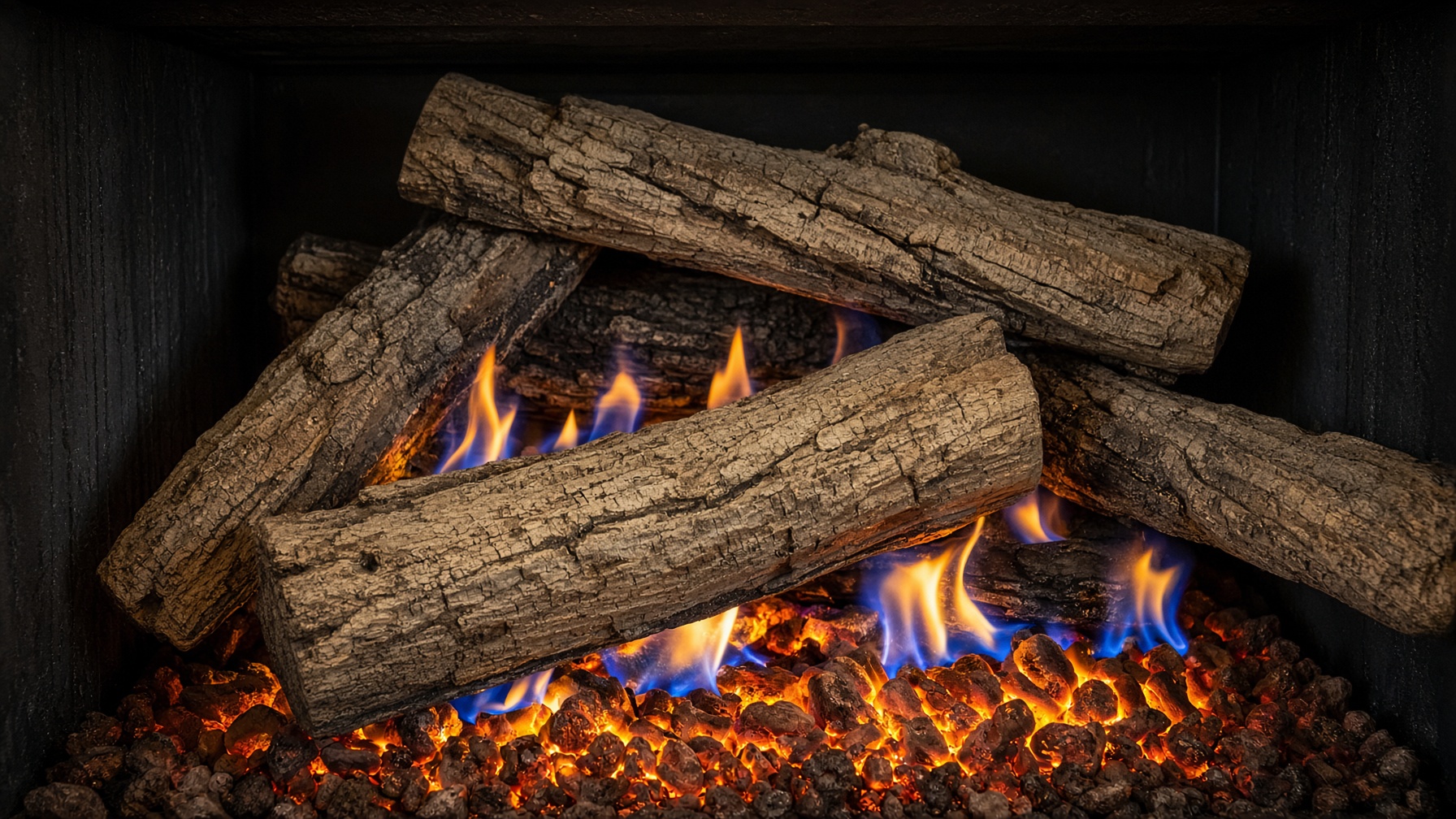
From there the visit follows the same sequence as our 20-point safety inspection: glass and gasket, log placement, burner cleanliness, ignition path, gas connections, flame quality, and controls. If you booked troubleshooting because the fireplace already failed, we spend the time on the symptom instead of a full seasonal tune-up, then tell you what it will take to finish the repair. Cleaning is often part of both visits. Repair is quoted only after the failed part is identified.
Pre-winter timing on the I-10 and 1604 corridors
The useful window in this climate is late August through October. After the first norther, every HVAC shop and chimney company in Bexar County is booked, and parts for Heatilator, Heat & Glo, Napoleon, and Majestic units start to delay. Scheduling the inspection while the house is still running the air conditioner means we can light the fireplace, watch the glass, and leave you a report without competing with furnace emergencies.
Neighborhoods with a high share of 1990s and 2000s production homes — Alamo Ranch, Westover Hills, the Medical Center side of 1604, Live Oak, and the Randolph corridor through Schertz — tend to have millivolt systems with wall switches. Those systems fail in a predictable way: the pilot lights at the fireplace, then the wall switch or remote does nothing because the thermopile can no longer make enough voltage. Custom homes in The Dominion, Shavano Park, and along Scenic Loop more often have electronic ignition, blowers, and full-function remotes. Those fail in a different way: no spark, intermittent spark, or a receiver that lost pairing over the summer.
Either way, the first question is not “should we replace the fireplace.” The first question is whether the vent is clear and the safety circuit is intact. That is why the inspection is priced on its own at $99 and troubleshooting is priced on its own at $69. You should be able to buy information without buying a rebuild.
How our visit is different from a store or a sweep
Fireplace stores in San Antonio are built to sell product. That is a legitimate business. It is not this business. When a homeowner searches for gas fireplace repair, they are usually trying to avoid a sales floor. Chimney companies are built around masonry and creosote. They will often look at a gas unit, and some do the work well, but the tools and the training are different. We carry millivolt meters, leak detection, manufacturer log diagrams, and common sensors for the brands that actually sit in local houses.
We also stay inside the appliance. Gas line work from the meter, unpermitted vent reroutes, and structural chimney rebuilds belong to other licenses. If we find a cracked refractory panel, a leaking valve, or a vent that has come apart in the chase, we document it. If the right next step is a plumber or a mason, we say that in the report instead of stretching a repair.
Cleaning is the unglamorous half of most successful visits. San Antonio dust films the glass from the inside when the gasket is tired. Pollen cakes the burner. A gas fireplace cleaning that only wipes the room-side of the glass leaves the problem in place. We remove the glass, vacuum and brush the burner, reset the ember bed, and check the gasket so the next fire does not print a new haze in a week.
Brands and fireplace types we see every week
Builder-grade Heatilator and Heat & Glo units are the most common inside Loop 1604. Napoleon, Mendota, Kozy Heat, and Majestic show up in remodels and custom houses north of 1604 and west toward Helotes. Empire and Monessen log sets sit in older masonry openings in Monte Vista, King William, and Alamo Heights. We service those gas appliances. We do not keep a warehouse of new units, and we will not tell you the only fix is a replacement if a thermocouple, igniter, or gasket will do the job.
If you can read the model number off the rating plate — usually on the lower control door or behind the screen — put it in the additional details field when you request a visit. It shortens the trip and tells us which diagram to bring for log placement. If you cannot find it, we will locate it on site.
What to do the week before we arrive
Clear the hearth so we can set the glass down without leaning it on a sofa. If the fireplace has a lower control door, make sure it is not blocked by a basket of throws. Pets should be able to be kept out of the room while the glass is off; burner ports and pet hair are a bad mix. If you have the owner’s manual or a photo of the rating plate, leave it on the mantel. That is the entire prep list. You do not need to shut the gas off at the meter.
After the visit you should be able to light the fireplace the way you always have, with a flame that is even across the burner and a glass panel that stays clear through a normal evening. If we found a part that needs to be ordered, you will know which part, why it failed, and whether the unit is safe to use in the meantime. That is the standard we hold on the inner loop and on the Hill Country routes alike.
A gas fireplace that smells like unburned fuel, that pops when it lights, or that leaves soot on the surround is asking to be shut down until it is tested. We leak-check accessible fittings, watch for delayed ignition, and will not leave a unit running if the vent path is blocked. We also look for a working carbon monoxide detector in the room. South Texas houses stay closed under air conditioning; a leaking or mis-vented appliance does not get the benefit of a drafty winter.
Vent-free units need extra caution. They are legal in many installations and they are not a toy. The oxygen depletion sensor is the shutdown device. Cleaning or “adjusting” that sensor out of the way is not a service we offer. If the ODS is dirty, we clean it to specification. If it is failed, it gets replaced.